
The capsule filling machine holds a vital position in capsule manufacturing. It assists in putting materials with active pharmaceutical ingredients (API) into capsules. As a result, it serves as the core element in capsule production processes. Without this machine, large-scale capsule manufacturing would be extremely difficult.
This piece outlines the six main uses of capsule filling machines. It is hoped that this information will help you pick the appropriate parts for capsule fillers. Such parts include hoppers and capsule filling mechanisms. It might also offer guidance for daily use and upkeep of the machines.
The NJP 2000c capsule filling machine is a famous model within the industry. It is widely employed for various filling tasks in pharmaceutical plants. It combines high efficiency and accuracy to satisfy the demands of large-volume production. Numerous manufacturers depend on it due to its stable performance.
Powder Filling
Powder-filled capsules are the most common kind of solid dosage form. The powder consists of fine, dry particles made by grinding, pounding, or crushing solid substances. These particles must meet strict purity requirements for use in pharmaceuticals. Any contaminant could harm the drug’s ability to work.
Usually, filling powder is the most frequent use of capsule filling machines. Small-batch powder filling can be done with manual encapsulators. However, manual machines are less efficient and accurate than automatic ones. Automatic capsule fillers save time and cut down on human mistakes.
This leads to a simpler design for powder capsule filling machines. Their hoppers and dosing mechanisms are easy to clean and maintain. A simple structure also reduces the chance of mechanical breakdowns. It makes day-to-day operation easier for workers.
Powder used in capsules needs good flowability to ensure smooth filling. Poor flowability can cause uneven powder amounts in capsules. To boost flowability, certain additives are often mixed into the powder. This guarantees each capsule gets the correct quantity of powder.
Tablet Filling
Tablets are usually bigger in size compared to other filling materials. A single capsule can only hold one or a few tablets. The number of tablets a capsule can hold depends on the capsule’s size. Larger capsules are able to contain more small tablets.
Among the six uses of capsule filling machines, tablet filling is not very common. But it is still needed in some clinical tests. If certain tablets irritate the stomach, they need to be protected. Placing these tablets inside capsules can reduce stomach irritation.
To fill tablets into capsules, you need a dependable automatic capsule filling machine. This machine requires special dosing systems to handle tablets. These systems should move tablets gently to prevent them from breaking. Broken tablets can change the drug’s dosage and quality.
The shape and hardness of tablets also affect the filling process. Tablets with irregular shapes may get stuck inside the machine. Tablets that are too soft might crumble while being filled. Therefore, tablets must be inspected before being filled into capsules.
Granule Filling
Just like powders, granules are a common solid dosage form in the pharmaceutical field. They are usually larger particles formed by combining smaller powder particles. The process of making granules from powder is called granulation. This process enhances the characteristics of the original powder.
Powder segregation can occur because of differences in particle size or density. Segregation often happens in hoppers or large storage containers. This causes inconsistent drug content in each capsule. It is a major issue for drug quality management.
To stop segregation during drug production, granules are often used instead of powder. Granules make sure each capsule has a uniform amount of drug. They also flow better than fine powders. This makes the filling process more efficient and smooth.
Generally, granules are mostly used for high-dose, low-potency drugs. The outer coating of granules is resistant to gastric juices. This coating must not be damaged during the packaging process. If the coating is damaged, the drug may not function properly.
Because of this, capsule filling machines for granules need a special design. This design should protect the coating on the granules. The machine uses parts that handle granules gently. These parts avoid rubbing or hitting the granules.
Understanding how granulation prevents powder segregation is important. Granulation binds small powder particles into larger granule units. This reduces differences in particle size and density. As a result, the risk of segregation during storage and filling is decreased.
Pellet Filling
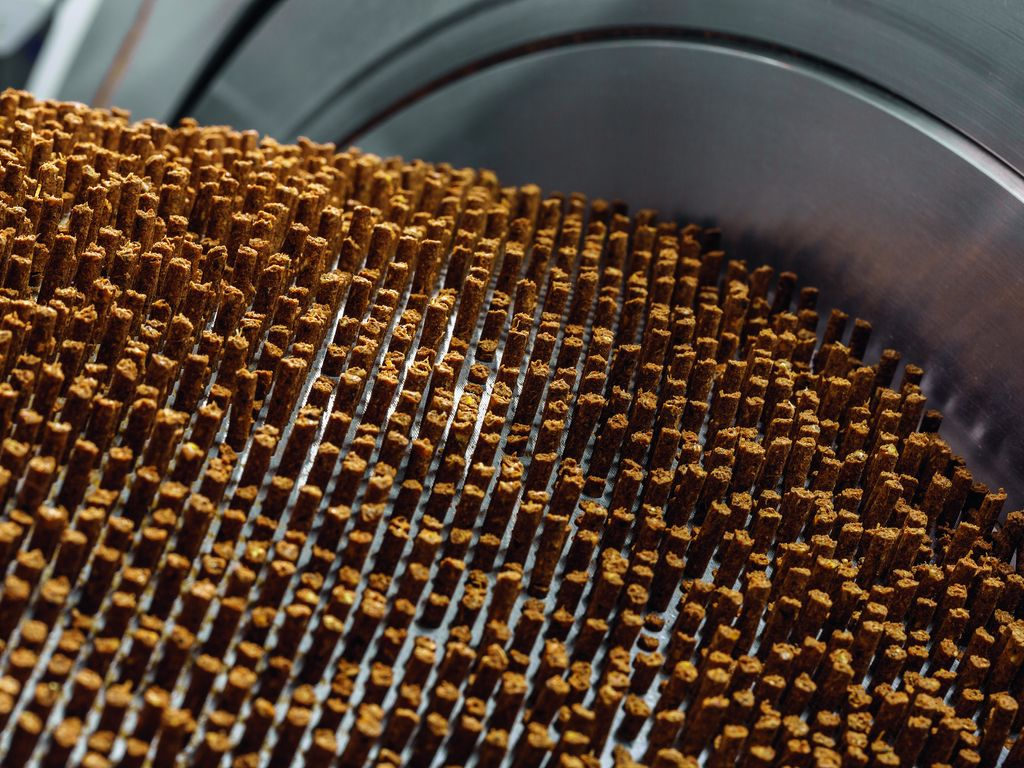
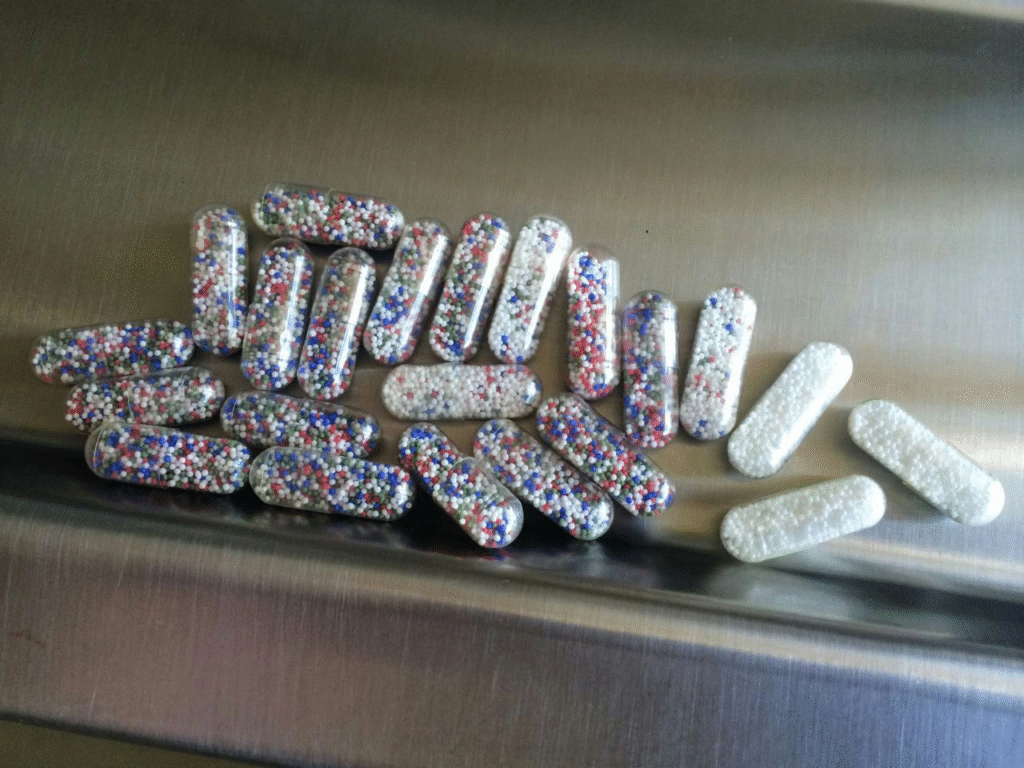
Pellets are small, easy-to-flow, round units. They are made by turning fine powders or granules into pellets through a process called pelletization. Each pellet has a consistent size and drug content. This ensures the drug is released evenly in the body.
In recent years, pellets have become very popular in the pharmaceutical industry. With the help of a coating, pellets can deliver drugs to specific parts of the body. For instance, some pellets release drugs in the intestines. This stops the drug from breaking down in the stomach.
Additionally, pellets are very flexible and can be mixed with other ingredients. Even ingredients that cannot be mixed together normally can be used with pellets. Each pellet can carry a different ingredient safely. This widens the range of possible drug formulas.
Even though pellets are a good way to administer drugs, filling them is slower. It is slower than filling powder in most cases. The round shape of pellets requires more precise handling. If not handled properly, pellets may roll out of the machine.
Nowadays, many capsule filling machines can fill both powders and pellets. But when filling pellets, you need to adjust the machine’s dosing system. The adjusted system can control the flow of pellets more effectively. This allows automatic capsule fillers to work well for pellet filling.
Cleaning the machine carefully is also necessary after filling pellets. Any leftover pellets could mix with other products. Cross-contamination is not permitted in pharmaceutical production. So, the machine must be cleaned thoroughly after each use.
Liquid Filling
Filling liquids into capsules involves two main steps. The first step is filling the liquid into the capsule, and the second is sealing the capsule. Both steps need to be done with high precision to ensure product quality. Any error can cause the liquid to leak out of the capsule.
For liquid filling, automatic capsule filling machines need liquid filling stations. These machines usually use servo-controlled liquid pumps. These pumps are accurate enough to fill small amounts of liquid. They can fill liquids ranging from 100 mg to 1.5 grams.
Furthermore, the capsule filling machine can handle liquids with different viscosities. It can fill both thin and thick liquids. This flexibility meets the needs of different liquid drug formulas. There is no need to purchase separate machines for different liquid types.
There are two methods available for sealing capsules. One method is regular sealing, and the other is banding. Each method has its own benefits and is suitable for different situations. Users can choose the method that fits their needs.
When sealing capsules using the regular method, a fine spray applies the sealing solution. The solution is sprayed onto the area where the capsule cap and body meet. It dries fast to create a tight seal. This prevents the liquid from leaking.
When using the banding method, a rotating wheel applies the banding solution. The wheel ensures the solution is applied evenly around the joint. Banding creates a stronger seal than regular sealing. It is perfect for liquids that are prone to leaking.
Hard capsules filled with liquid have become more popular lately. They allow the drug to be absorbed faster than solid dosage forms. Patients who struggle to swallow solid drugs prefer liquid-filled capsules. So, liquid filling is a growing use for capsule filling machines.
Combination Filling
Sometimes, capsules need to be filled with a mix of different products. These products can be a combination of liquids and semi-solid substances. They can also be a mix of powders and small pellets. These combinations meet special drug delivery requirements.
In such cases, you will need to have a custom capsule filling machine. You should find a reliable supplier to create this custom machine. The supplier should understand your specific filling needs. They can design a machine that matches your requirements.
Reliable suppliers have the ability to make custom-made machines. These machines have special parts for filling combinations of materials. They can handle different materials without causing cross-contamination. This ensures the final product is safe and works well.
Besides the machine’s ability to handle multiple materials, the capsule formula is also important. The formula of the capsules must meet certain standards. These standards ensure the final product follows current Good Manufacturing Practices (cGMP). cGMP is a set of strict quality rules for pharmaceuticals.
Before filling combinations of materials, careful testing is required. You need to test how different materials interact with each other. Some materials may react negatively and spoil. Testing helps avoid these problems during production.
You also need to adjust the machine’s speed when filling combinations of materials. Different materials require different handling methods. A speed that works for one material may not work for another. Adjusting the speed properly ensures the filling process goes smoothly.
Final Thoughts
Now you have a clear understanding of the six typical uses of capsule filling machines. Each use has specific requirements for the machine. Knowing these requirements helps you make correct decisions. It saves you time and money over time.
To meet your unique capsule filling needs, first study the material you want to fill. Learn about the properties of the material. Is it a powder, liquid, or a combination? This will determine the type of machine you need.
You should also study the dosage forms of the capsules used in the filling machine. Different dosage forms require different machine settings. For example, high-dose drugs need more accurate dosing. Low-dose drugs need stricter control over content.
Then, work with a supplier that can provide the best machine for your needs. A good supplier offers more than just a machine. They also provide support services like installation, training, and maintenance. This ensures your production process runs without problems.
Choosing the right capsule filling machine is essential. It impacts the quality of your products and your production efficiency. With the right machine, you can easily meet market demands. You can also avoid expensive mistakes during production.