
Blenders play an incredibly important role in the pharmaceutical industry. They simplify the entire drug manufacturing process significantly. They also make the process more accurate than manual methods. With blenders, you can create high-quality, uniform products without much effort. This article will give you details about various kinds of pharmaceutical blenders. It covers how they work, their specific features, and where you can obtain them.
What is a Pharmaceutical Blender & Mixer?
Blenders used in the pharmaceutical industry are not the same as regular blenders. They have unique designs to meet drug production needs.
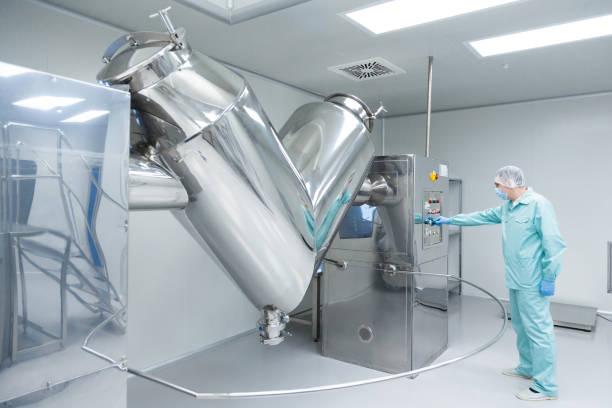
Pharmaceutical blenders are a must for large-scale drug manufacturing. They help mix chemicals and ingredients like granular medicine and solid powder. They also improve the processes of mixing, discharging, and cleaning.
One common type is the pharma blender SH 400. It is designed to handle specific pharmaceutical mixing tasks. It meets industry standards for safety and efficiency. Many manufacturers rely on it for consistent results.
How Does a Pharmaceutical Blender & Mixer Work?
Pharmaceutical blenders are made from materials such as aluminum, steel, cast iron, and stainless steel. Stainless steel is often preferred for its easy cleaning and rust resistance. The choice of material depends on the ingredients being mixed.
Some pharmaceutical blenders have general functions, while others are specialized. Their use varies based on the chemical properties of the substances. It also depends on how the substances react with each other.
Blenders in the pharmaceutical field break down materials. This increases the surface area of the materials.
Increased surface area speeds up the reaction between different substances. It also makes the reaction more effective. Pharmaceutical blenders mix materials with different textures and consistencies. This results in end products with smooth, uniform thickness.
Powder blending is a common task for these blenders. It requires precision to ensure every particle is evenly mixed.
The Functions of Blender Machines in the Pharmaceutical Industry
The uses of these blenders go beyond basic mixing. They have several key roles in drug production.
First, they help adjust the pH level and thickness of substances. This is crucial for creating effective drugs.
Second, they are essential for dispersing solids and mixing powders. They also help create suspensions needed in some medications.
Third, they ensure the precision of drugs and the stability of the main drug component. This keeps the drug safe for use.
Fourth, they combine active pharmaceutical ingredients. They also maintain the drug’s appearance and uniformity.
Fifth, they are necessary for mixing organic and inorganic materials. This is common in many types of drug manufacturing.
What Are the Types of Mixers Used in the Pharmaceutical Industry?
The pharmaceutical industry has many types of blenders. Most of these blenders work in similar ways. The main difference between them is their design.
Pharmaceutical manufactures specialize in producing and selling pharmaceutical equipment. This includes tools like pharmaceutical mixers and blenders. Some of their popular blenders are V cone blenders, double cone blenders, ribbon blenders, and 3D powder blenders. Below are detailed explanations of different pharmaceutical blenders.
Understanding each type helps you choose the right one for your needs. It ensures your production process runs smoothly.
● Ribbon Blender
What exactly is a ribbon blender machine? It is one of the most effective blenders in the pharmaceutical industry. It is also widely used in other fields like food, plastics, and chemicals. It is designed to perform a triple mixing action for thorough results.
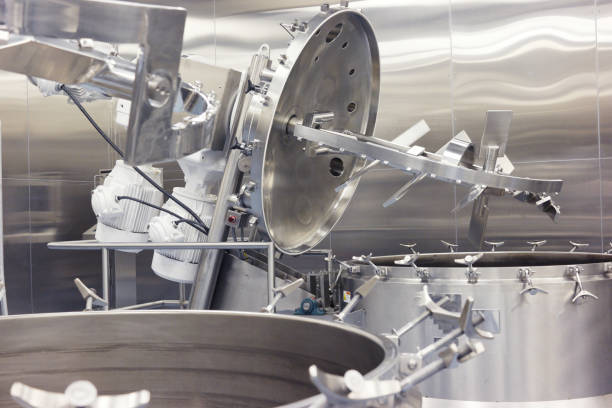
A ribbon blender is a light-duty, low-shear device. It has a W or U-shaped horizontal trough. Inside the trough, there is a rotating double helical ribbon agitator. This agitator helps mix materials evenly.
Ribbon blenders can handle solids, liquids, and gas streams. They are often used for mixing dry and pre-processed powders. The typical mixing time ranges from ten to fifteen minutes. They can also mix dry solid lumps and process large batches of wet mass.
The advantages of a ribbon blender include belt-driven transmission power. It also has wear and corrosion resistance. Some models come with cooling jackets for different applications.
You can watch a tutorial video to learn how to use a ribbon blender. This video will show you step-by-step operations.
Many pharmaceutical manufacturers provide a series of high-quality Horizontal Ribbon Blender Machines. These machines have a paddle agitator. They can mix different proportions of dry or wet powdered materials evenly. The available series include CH10-50, CH100-500, WLDH 100-500, and WLDH 1000-4000.
● V Cone Blender
A V cone blender is also called a twin shell blender. It has two mixing shells joined at a 70 to 90-degree angle. This angle forms a V shape, giving the blender its name.
The V-shape design makes it easy for particles to move. It also simplifies the blending process. The working principle of a V cone blender involves rotating on a horizontal axis. As it rotates, material particles fall and collide on the mixture’s surface.
This blender is used for mixing fragile solid-solid combinations. It is also good for precise measurements when mixing powders and granules. It can also be used for lubricating materials.
A pharmaceutical V cone blender is easy to use. It has a worm gear to control the speed. It can handle a weight capacity of 20 kilograms to one ton per batch.
A tutorial video is available to show how to use a pharmaceutical V cone blender. This video will help you master the correct usage.
If you are looking for V-type blenders, you have come to the right place. Professional pharmaceutical manufacturers have years of experience in raw material processing. They can be considered real experts in V blenders. They offer a wide range of products from V50 to V4000. These products meet diverse production needs.
● Double Cone Blender
What is a double cone blender? It is a tumbling blender with a double-cone-shaped shell. The shell is placed in a diagonal position. The cone form is fixed at a 90-degree angle to the cylindrical cone shell. This design helps achieve a uniform mixture.
All parts of the blender are made of stainless steel. This includes the mixing tank and the blades. Stainless steel is chosen for its durability and ease of cleaning.
A pharmaceutical double-cone blender has a gear box. This gear box adjusts the speed of the blender. It also has a fireproof motor to prevent accidents. One end of the cone has a butterfly valve. This valve is used for unloading the blended materials. The other end has a hole for loading materials into the blender.
The main use of a double cone blender is dry blending of less dense materials. It is commonly used in the cosmetic, food, chemical, and pharmaceutical industries. It effectively mixes dry powders and granules of different forms and sizes. These materials should have homogeneous particles.
The estimated mixing time is about 10 minutes. It operates at 20 to 100 revolutions per minute. The cone design reduces the risk of spillage.
A tutorial video shows how to use a pharmaceutical V cone blender. You can refer to it for guidance.
The double cone mixer CW-300 is a popular choice.
● Other Types of Pharmaceutical Blenders
Pharmaceutical blenders are not limited to the ones mentioned above. There are several other types available.
Drum Blender
A drum blender is a tumbling blending machine. It is shaped like a gallon-sized drum. It has a fully enclosed shell and is powered by electric motors. However, it does not require a lot of energy to run.
A drum blender does not have internal rotating parts. It has no impellers or blades inside. Blending happens when the drum rotates up and down.
Materials are loaded and unloaded through the same valve. The drum has no dead spots. This allows for uniform blending and mixing.
It is very efficient at mixing fragile and delicate materials. These materials include powders. It is also free from dust contamination.
A tutorial video explains how the 3D powder blender works. You can watch it to learn more.
Octagonal Blender
As the name suggests, this pharmaceutical blender has an octagonal shell. The middle section of the shell is rectangle-shaped. The ends of the shell are connected with firm strands.
It belongs to the category of tumbling blenders. It is designed to hold a larger volume of materials. It takes up less space than V cone and double cone blenders.
The body is made of stainless steel, which is easy to clean. It fully encloses the materials to prevent spillage. It also keeps out dust particles that could cause contamination.
Materials are loaded through the charging port at the top of the shell. Unloading is done through the butterfly valve. The pharmaceutical octagonal blender operates at a slow speed. It is used for slow and gentle mixing of dry granules.
The inside of the shell is mirror polished. The outside is matt polished. This design enhances both functionality and appearance.
Bin Blender
Bin blenders can come in different shapes. These shapes include rectangles, squares, or V-shapes. They are also known as free-fall or V blenders.
It has two opening valves. One valve is for loading materials. The other is for unloading. A pharmaceutical bin blender performs a series of actions. These actions include lifting, rotary movement, lowering, clamping, and mixing. All these actions work together to create a smooth product.
Vertical Blender
Vertical blenders are part of the connective blender category. They are used for blending and mixing dry granules and pellets. They are made of stainless steel. They have a narrow top and a large diameter at the bottom. This shape resembles a cone-shaped vessel.
Due to its design, a vertical blender can work effectively. It only needs 10 percent of its blending capacity to operate. It can also discharge all the blended material completely.
How to Pick the Right Pharmaceutical Blender for Your Production?
Choosing the right pharmaceutical blender is crucial for your production. It helps save time, effort, and money in the long run.
Although most blenders have similar functions, there are key differences. So, there are several factors to consider when picking a blender. Let’s look at these factors one by one.
First, consider the sensitivity and frailty of the material. This is a fundamental attribute and should be a top priority. Before choosing a blender, think about how sensitive your material is. This avoids wasting time and resources.
Note that some blenders are suitable for fragile materials. Examples include V cone and double cone blenders. Unlike these, a ribbon blender generates a lot of heat. This heat could damage sensitive materials.
Second, check the blending accuracy of the machine. Most pharmaceutical blenders produce homogeneous products. But you still need to confirm the blender’s operation. This ensures you get the desired results before buying.
Third, consider the capacity of the blender. If you do small-batch production, choose a cone screw blender. It can blend 10 percent of its capacity. In comparison, ribbon blenders need about 40-50 percent of their capacity.
Fourth, think about your budget. This is an important factor to consider. If your budget is tight, opt for blenders that don’t use much power.
Fifth, take space availability into account. Before purchasing, check the equipment size. Make sure it fits the space you have.
Other conditions include the machine’s discharge method. Also, consider processing time and cleaning requirements. These factors affect your overall production efficiency.
Conclusion
Are you looking for the best pharmaceutical manufacturing company in the industry? Or a brand that provides top-quality machines, equipment, and instruments? If so, you are in the right place. You don’t need to look any further.