
What Is the Snow Day Calculator and How Does It Work?
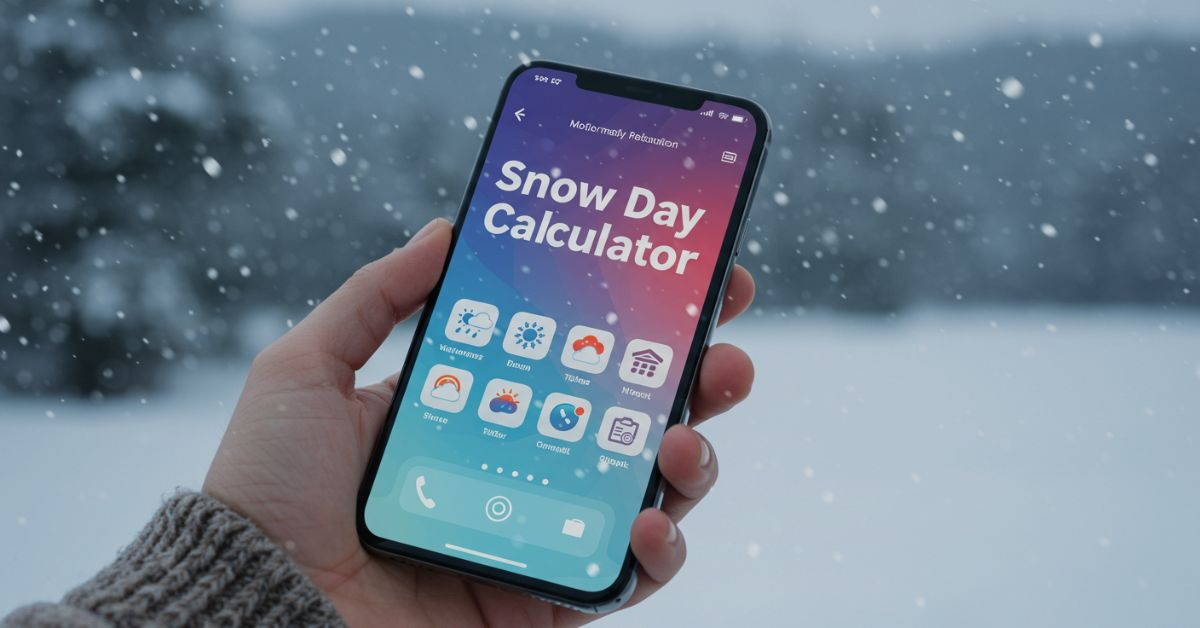
The Snow Day Calculator was created by David Sukhin when he was just a middle school student. Back then, he wanted a fun way to guess if snow would cancel school. It started as a small personal project on his computer. Over time, it grew into a website used by kids across the country.
The calculator uses many different data points to make its predictions. First, it looks at how much snow is forecast for the area. It also checks local weather patterns from past winters. It even studies when schools closed before for similar snowfall. All these bits of info mix together to make a percentage score.
Students love checking the calculator every night when snow is coming. They’ll grab their phones after dinner to see the latest number. Parents use it too—they might stock up on snacks if the percentage is high. Its bright, simple design makes it easy to share on apps like TikTok or Instagram.
On snowy evenings, you’ll often see kids posting the calculator’s score online. They’ll say things like “90% chance—crossing my fingers!” It turns waiting for snow into a game. Even teachers sometimes joke about checking it to plan the next day’s lessons.
How Accurate Is the Snow Day Calculator in Real Life?
Many users say the tool is surprisingly close during big snowstorms. When a blizzard hits the Northeast, a 95% prediction usually means no school. Kids in those areas often trust it more than casual weather checks. But it’s not perfect—there are plenty of times it’s wrong.
Forecast errors are one of the biggest problems for the calculator. A storm might be predicted to drop 8 inches of snow. But by morning, only 3 inches have fallen. The weather can change fast overnight, and the tool can’t keep up. This leaves kids upset when they wake up expecting a day off.
Others notice gaps when schools make unexpected choices. Once, a school stayed open even though the calculator said 80% closure. The district had a big test scheduled and didn’t want to delay it. The tool couldn’t guess that human decision. So accuracy really depends on more than just snow.
The calculator works better in regions with steady closure rules. Midwest schools, used to heavy snow, might close at 6 inches. But schools in Georgia, where snow is rare, might close at 1 inch. The tool learns these patterns over time, making it more reliable in some places.
Mild winter areas can throw the calculator off too. A light dusting in Florida might cancel school. But the same amount in Minnesota would mean business as usual. The tool sometimes mixes up these regional differences, leading to wrong guesses.
Key Factors That Influence Snow Day Predictions
Snowstorms are famous for being hard to predict. A small shift in temperature can change snow to rain. If the storm moves just 10 miles away, the area might get nothing. These little changes ruin the calculator’s data. It can’t guess last-minute shifts in the weather.
Another factor is how fast snow falls. Even 6 inches can be bad if it piles up in an hour. But 6 inches over 8 hours gives plows time to clear roads. The calculator often misses this detail. It just looks at total inches, not how quickly they come.
School district policies also play a big role. Some districts have strict rules—they close if roads are icy. Others wait to see how the morning goes. These policies aren’t written down anywhere. The calculator can only guess them by looking at past closures.
Staffing is another hidden factor the tool can’t measure. If many teachers can’t make it to school, the district might close. Even if the weather is fine, a shortage of staff changes things. The calculator has no way to know about teacher absences.
Examples: When the Snow Day Calculator Gets It Right—and Wrong
During the big blizzard of 2022 in Boston, the calculator shined. It predicted 98% closure for most schools. By 6 a.m., every district in the area had canceled classes. One student posted a screenshot of the calculator next to the school’s closure notice. He joked, “This thing is smarter than my principal!”
In Chicago, the tool also got it right during a January snowstorm. It said 92% chance of closure, and schools shut down by 7 p.m. the night before. Parents loved it—they had time to plan for kids staying home. The calculator’s history of Chicago closures helped it make the right call.
But there are plenty of times it fails. Last winter in Denver, the calculator said 85% closure. The storm came, but it was lighter than expected. By morning, roads were clear, and school was open. Kids were upset—they’d stayed up late thinking they had the day off.
Another time, in Seattle, the calculator predicted 70% closure. The area got snow, but the district decided to stay open. They had already canceled school twice that month and didn’t want to fall behind. The calculator couldn’t guess that the district was worried about missed days.
Should You Rely on the Snow Day Calculator?
The calculator’s biggest plus is the fun it brings. It makes snowy nights exciting for kids. They’ll gather with friends to check the score and make plans. It’s a great way to bond over the winter weather. But it’s not a tool you should trust for real plans.
One problem is that students might take it too seriously. If it says 90%, they might skip packing their backpack. They might even tell their friends school is closed. When school is open, they’re caught off guard. It’s better to treat it as a game, not a fact.
The safest way to use it is to pair it with other sources. Check the local news for weather updates. Follow your school’s social media page for closure notices. The National Weather Service also has reliable alerts. Use the calculator for fun, but use official sources for real info.
Parents should help kids understand it’s just a guess. They can say, “Let’s check the calculator for fun, but we’ll wait for the school’s email.” This teaches kids not to rely on one tool. It also keeps them from being disappointed if the prediction is wrong.
Conclusion: A Fun Tool, but Not a Guarantee
The key is to use it wisely. Enjoy checking the score with friends on snowy nights. Talk about what you’d do if school was closed—build a snowman, watch movies, or bake cookies. But always wait for the school’s official announcement. That’s the only way to know for sure.
For students, parents, and teachers, the calculator is a winter tradition. It adds excitement to cold, snowy days. But it’s not a replacement for real information. When used the right way, it’s a happy part of winter—without the disappointment of wrong guesses.