
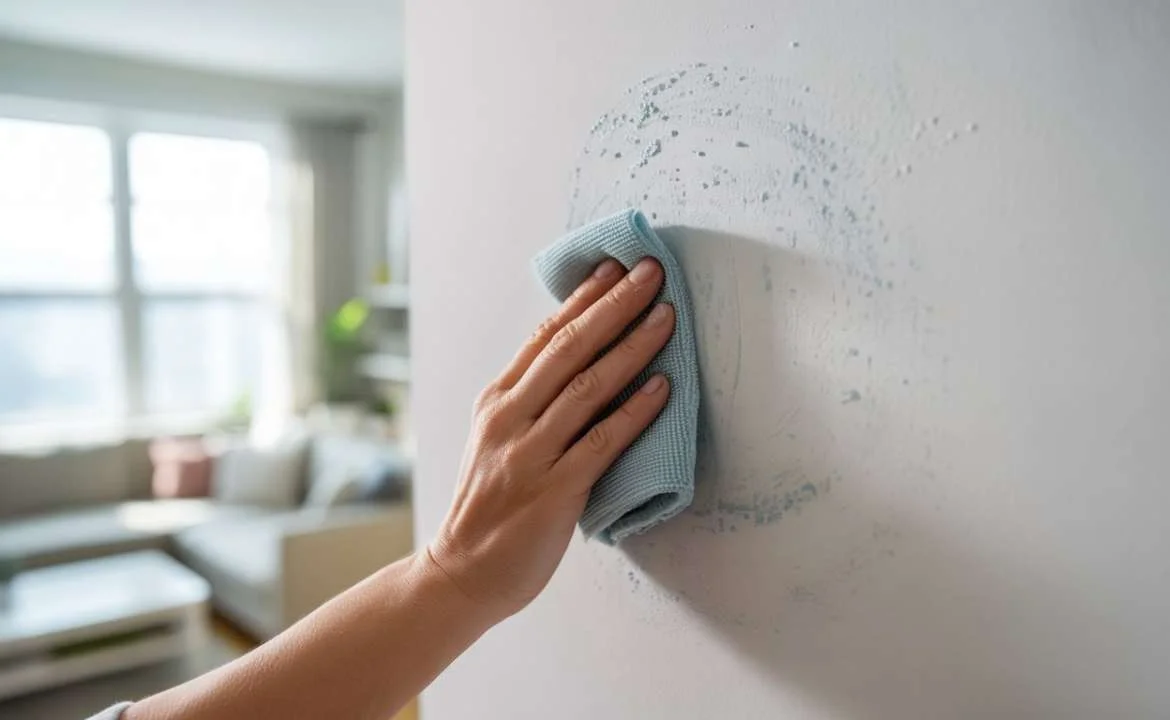
Blu Tack is handy for hanging posters, notes, and lightweight décor. But the smudges it leaves behind aren’t so welcome.
If you’re wondering how to clean Blu Tack marks off walls without damaging your paint, this guide helps. It walks you through every safe and effective method. Whether you’re a renter trying to keep your deposit, you’ll find practical tips here.
Whether you’re a homeowner refreshing your space, these tips also work. They save you time and avoid the frustration of ruined walls.
Understanding Why Blu Tack Leaves Marks on Walls
What Blu Tack Is Made Of and Why It Sticks
Blu Tack is a blend of rubber, oils, and resins. These ingredients make it soft and sticky. Over time, the oils transfer onto wall paint.
This leaves shiny or dark smudges after removal. Warmer temperatures can increase residue on walls.
Pressing Blu Tack too firmly also makes residue worse. Even small pieces left for weeks cause visible marks. This is why timely removal helps.
Common Wall Surfaces More Prone to Residue
Flat or matte painted walls absorb oils easily. This makes stains more noticeable on them.
Porous surfaces like unsealed plaster hold residue longer. Glossy or semi-gloss paint resists staining well. It is also easier to clean than matte options.
Textured walls trap residue in their crevices. This makes cleaning textured surfaces trickier. The difference in surfaces changes your cleaning approach. You can’t use the same method for all wall types.
When You Should Avoid Using Blu Tack
Avoid Blu Tack on freshly painted walls. It can pull off small layers of uncured paint.
Also skip it on textured surfaces and heat-exposed walls. Sunlight softens Blu Tack quickly. This speeds up oil transfer to the wall.
Even temporary use on these walls leads to long-term issues. It’s better to choose other hanging options instead. These alternatives keep walls safer.
Preparation Before Cleaning Blu Tack Marks
Test a Small Area to Prevent Paint Damage
Test your cleaning method on a hidden corner first. Some paints discolor or peel if cleaned harshly.
Older or low-quality paints are especially fragile. Choose a spot behind furniture or near the baseboard. These areas are not easily seen.
Let the tested area dry fully before checking. You can then adjust your method if needed. This step prevents big mistakes.
Tools and Household Items You’ll Need
Most methods use items you already have at home. Gather a clean cloth, mild dish soap, and warm water.
You might also need a magic eraser or citrus cleaner. Fresh Blu Tack or rubbing alcohol works too. Gather everything first to avoid running back and forth.
A microfiber cloth is gentler than regular cotton. A small sponge helps with targeted cleaning. Make sure all tools are clean to avoid new dirt. This keeps the cleaning process smooth.
Safety Tips for Delicate or Newly Painted Walls
For paint less than 30 days old, avoid moisture and chemicals. Gentle lifting with fresh Blu Tack is safest here.
Use soft pressure throughout the cleaning process. Keep a dry cloth nearby to blot accidental moisture.
If the paint feels soft to the touch, skip wet methods. Taking it slow prevents permanent paint damage. Rushing can ruin the wall’s finish.
How to Clean Blu Tack Marks Off Walls (Step-by-Step)
Method 1 — Using Fresh Blu Tack to Lift Residue
This counterintuitive trick works surprisingly well. Roll fresh Blu Tack into a small ball.
Gently press it against the stain to lift oils. Use light pressure to avoid paint damage. This method is safest for delicate paint types.
You’ll notice the stain fading as you lift more oil. Do this when the wall is dry for better results. Keep rotating the Blu Tack to clean areas.
Method 2 — Warm Soapy Water for Light Stains
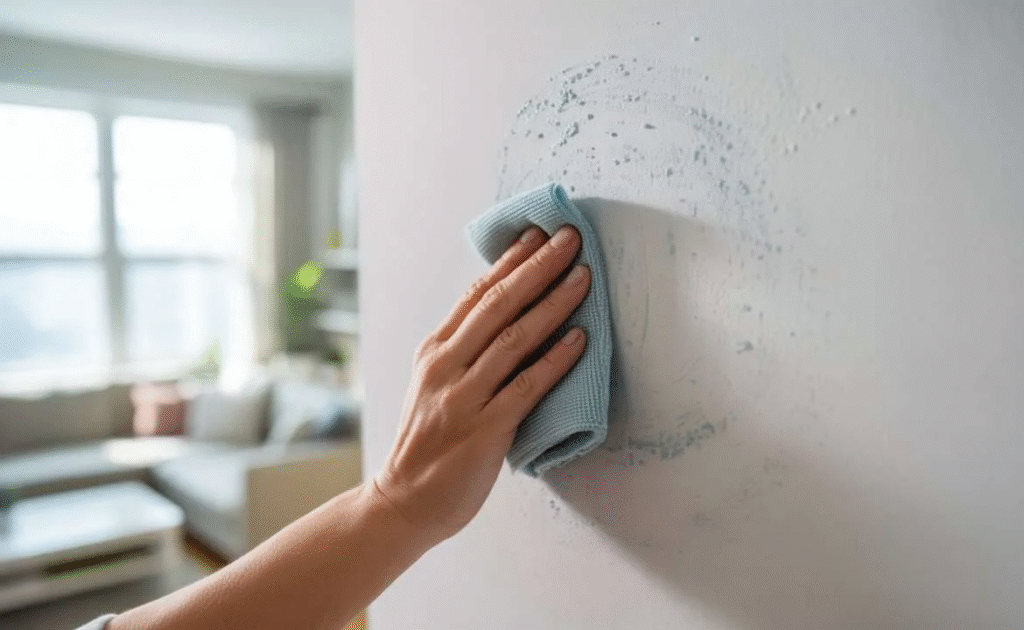
Mix a few drops of dish soap with warm water. Dip a microfiber cloth into the soapy mixture.
Wring it out thoroughly to remove excess water. Wipe the mark in small circular motions. This method works best for minor, fresh smudges.
Don’t let the soapy water sit on the wall long. Dry the area right after cleaning to prevent spots. Repeat gently if the mark still remains. This is a mild way to clean.
Method 3 — Using Citrus-Based Cleaners
Citrus cleaners break down oily residue naturally. Apply a tiny amount to a cloth, not the wall.
Dab gently at the mark to avoid spreading. The cleaner cuts through the mark quickly and effectively. Avoid citrus on matte paint—it leaves shiny spots.
Test citrus cleaners on a hidden area first. Wipe with a damp cloth after to remove residue. A little citrus cleaner goes a long way. Don’t overapply, as it can affect paint sheen.
Method 4 — Magic Eraser for Tough Stubborn Spots
A magic eraser works like ultra-fine sandpaper. Wet it slightly before using on the mark.
Lightly buff the area with short, gentle strokes. Reserve this for older stains or failed methods. Don’t press hard—let the eraser do the work.
Rinse the eraser often to keep it effective. Dry the wall immediately to check results. This method is for more stubborn marks.
What to Avoid (Harsh Abrasives, Over-Scrubbing, Chemicals)
Never use bleach, strong solvents, or metal scrubbers. They remove the mark but damage the paint.
Over-scrubbing creates uneven patches on the wall. These patches are more noticeable than the original mark. Avoid ammonia-based cleaners on latex paint.
They can cause discoloration or peeling. If a chemical has a strong smell, it’s too harsh. Stick to mild, household items for safe cleaning.
Alternative Household Remedies That Work Well
Vinegar Solution
Mix equal parts white vinegar and warm water. Vinegar breaks down residue gently on most paints.
Apply lightly with a soft cloth to the mark. Wipe clean with plain water afterward. The vinegar smell fades quickly as it dries.
Don’t use undiluted vinegar—it dulls some paints. For extra tough spots, let the solution sit 30 seconds. This method is cheap and easy to make.
Baking Soda Paste
Baking soda works as a mild abrasive. Combine it with a little water to form a paste.
Rub the paste onto the stain with your fingertips. Use tiny circles to avoid paint damage. Rinse the area after cleaning to remove paste.
This method helps with semi-gloss or gloss walls. Make sure the paste is thick enough to stay on the cloth. Don’t leave it on the wall too long—it dries and leaves film. Wipe with a damp cloth until all paste is gone.
Rubbing Alcohol or Mild Adhesive Removers
Dab a small amount of rubbing alcohol on a cotton pad. Tap gently over the mark to avoid spreading.
It evaporates quickly and targets oil-based residue. Avoid soaking the wall to prevent fading. Use 70% rubbing alcohol for the best balance.
It’s strong enough to clean but gentle on paint. For adhesive removers, choose “safe for painted surfaces” labels. Blot the area instead of rubbing to protect paint. Let the alcohol dry fully before checking results.
Which Methods Are Safe for Different Paint Finishes
- Matte or flat paint: Stick to fresh Blu Tack or warm soapy water. A tiny amount of vinegar also works.These methods avoid adding shine or removing paint. They keep the matte finish intact.
- Eggshell or satin: Light citrus cleaner is a good choice. Baking soda also works for these finishes. They can handle mild abrasives without dulling. Test first to ensure no sheen changes.
- Semi-gloss or gloss: Most methods work here, including rubbing alcohol. Magic erasers are safe for these hard finishes. Their tough surface resists damage better than others. Always double-check the paint type first. If you’re unsure, start gentle.
How to Prevent Blu Tack Marks in the Future
Use Painter’s Tape or Safe Poster Putty Instead
Painter’s tape is a safer option for hanging décor. Removable adhesive strips also work well.
Some brands make low-oil poster putty. This putty is designed to avoid staining walls. Painter’s tape comes in different widths for various uses.
Removable strips hold more weight than Blu Tack. Low-oil putty is labeled “wall-safe” on packaging. These alternatives keep walls clean while holding items. They are easy to find in stores.
Tips for Hanging Posters Without Damaging Paint
Use lightweight frames for posters and art. Hang from small hooks if you need more support.
Double-sided removable pads are another option. They peel off easily without residue. If you must use putty, apply only small amounts.
Avoid pressing too hard to prevent oil transfer. Lightweight frames distribute weight evenly on walls. Small hooks can be filled with spackle later. Don’t leave items hanging for months on end.
Check periodically for any signs of damage. This prevents unexpected marks or paint issues. Taking these steps keeps your walls looking new.
Best Practices for Removing Blu Tack Properly
Remove Blu Tack slowly by rolling it downward. Don’t pull it straight off—this leaves residue.
Start from one edge and roll toward the center. This reduces oil transfer to the wall. If the Blu Tack feels stuck, warm it with your hand.
The slight heat helps it release from the wall. Don’t yank or pull quickly—this causes more marks. After removal, check the area immediately. Catching leftover residue early makes cleaning easier.
Wipe away any small smudges right away. This prevents the need for deeper cleaning later. Proper removal is key to avoiding marks. It’s a simple step that makes a big difference.
Final Thoughts
Quick Recap of the Most Effective Cleaning Methods
Start with the gentlest options first. Fresh Blu Tack and warm soapy water are great starters.
Move to citrus cleaners or magic erasers if needed. With patience, most marks disappear completely. Always test your method on a hidden spot first.
Use soft pressure to avoid paint damage. Match your method to your wall’s paint finish. This ensures safe and effective cleaning. Taking time to clean properly avoids further damage.
You don’t need expensive products to get results. Household items work just as well for most marks. Following these steps keeps walls clean. It’s easy once you know the right way.
When You Should Repaint Instead of Cleaning
If Blu Tack deeply stained old or porous paint, repaint. Repaint also if the paint already began to peel.
A quick repaint is the best solution here. It fixes issues cleaning can’t resolve. Fortunately, most Blu Tack marks clean up well.
Now you know how to clean them safely. Repainting small areas is easier than fixing permanent stains. Choose a matching paint color for a seamless look. Even after repainting, use safe hanging methods.
This prevents new marks from forming. Keeping walls clean long-term is simple with the right steps. Your space will stay fresh and mark-free. You’ll feel proud of your clean walls.